About
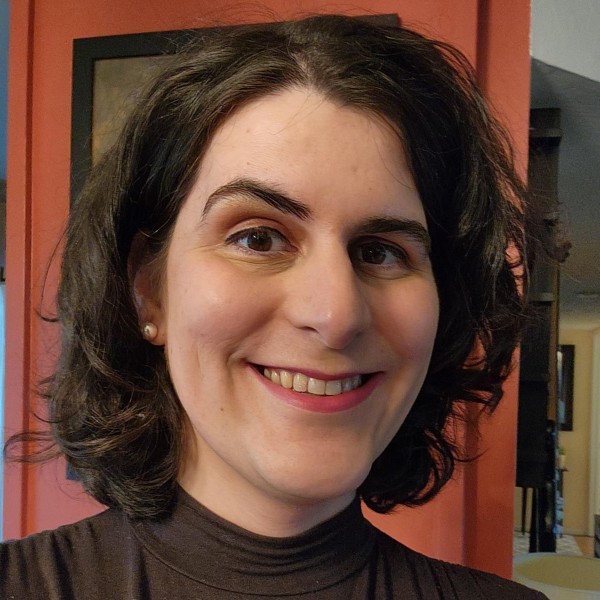
I grew up in Granada, in the south of Spain — a city of medieval palaces, flamenco echoing off stone walls, and Real Madrid on TV every weekend. From an early age I was fascinated by how systems work: radio signals, antennas, the invisible architecture beneath modern communication. That curiosity carried me through a BS and MS in Telecommunications Engineering at the Universidad de Granada, and then — after winning the La Caixa Fellowship, one of Spain’s most prestigious academic grants — across the Atlantic to UC San Diego for a second MS in Electrical and Computer Engineering.
I have spent 15+ years building and verifying the scientific software that engineers trust when lives and missions are on the line. At Delcross Technologies I helped develop Savant, the engine behind HFSS SBR+. At Ansys I grew from engineer to technical leader, owning the end-to-end verification strategy for one of the world’s most complex physics simulators. In 2025 I joined Synopsys as a Sr. Staff Engineer in Verification Engineering — the largest EDA company on the planet, and a whole new set of hard problems to solve.
I have called the San Francisco Bay Area home since 2017. Outside the terminal I play guitar, run trails, cook dishes from wherever the world is calling me, and read anything I can get my hands on. I still catch every Real Madrid match I can — some things never change.
Expertise
EDA Verification
Large-scale verification strategy, quality standards, and regression infrastructure at Synopsys and Ansys. Owning the full quality lifecycle for physics simulation software that the aerospace, semiconductor, and defense industries depend on.
EM Simulation
Computational electromagnetics, HFSS, SBR+ ray-tracing solvers, and RF/antenna design — from theory to production code.
Test Infrastructure
Automated pipelines, CI-level regression frameworks, and cross-team quality standards that ship reliable software at scale.
Scientific Computing
HPC in C++ and Fortran, parallel computing with OpenMP, MPI, and CUDA, and numerical methods for physics simulation.
Skills
Languages
Domains
Tools & Platforms
Currently
A snapshot of what I’m into at the moment.
Testimonials
She was part of the class I gave at Telecommunications Eng. in Granada, and that year she was one of the most outstanding students; she even helped me prepare the syllabus beforehand. I have no problem endorsing her.
Rebecca is a very bright person. It was a pleasure to supervise someone who was not only enthusiastic but also very quick to take up new ideas. She produced work of very high quality, exceeding all the objectives set for her.
I enjoyed teaching Rebecca in two undergraduate courses. She had an excellent academic record and was an eager and informed participant. I am confident she’ll find success at whatever she tackles next.
Rebecca worked for my company on an assignment to the BT Mobility Research Centre. She worked hard and enthusiastically, and the customer was very pleased with her project. I wish her luck with future assignments.
Ms. Rebecca Martin distinguished herself as one of the most eminent students in her class, obtaining maximum grades and always showing a positive attitude. She opted to carry on advanced laboratory projects, cooperating with classmates in developing several digital systems and their implementation on FPGAs.